
DIN EN ISO 1234
Split pins
English
1998
0.000
Detailed Information
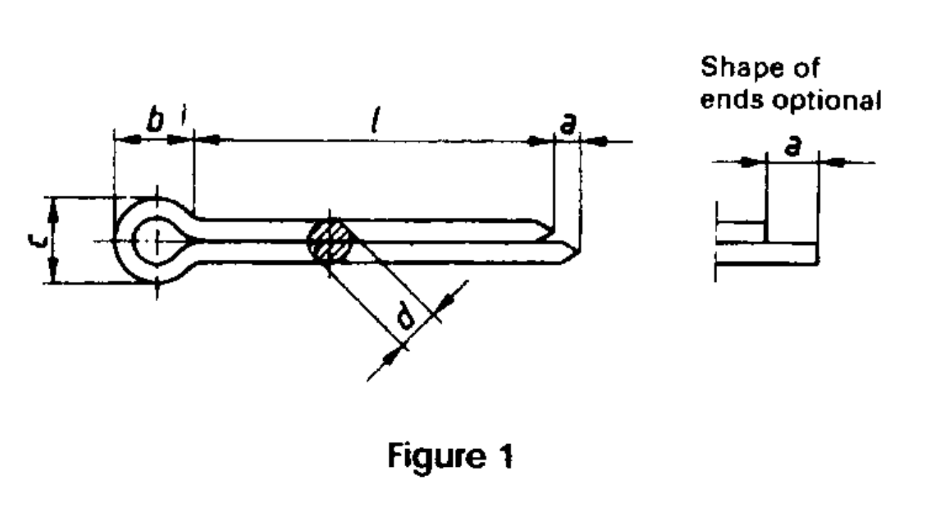
This International Standard specifies the characteristics of split pins.
Download File
(Log in to download spec.)
Check out other specifications
2008
English
BREAK MANDREL BLIND RIVETS
This standard establishes the dimensional, mechanical, and performance requirements of inch series break mandrel blind rivets suitable for use in joining the component parts of an assembly. A metric series counterpart standard is in existence under designation IFI-505.
2007
English
TEST FOR EVALUATING THE TORQUE-TENSION RELATIONSHIP ON BOTH EXTERNALLY AND INTERNALLY THREADED FASTENERS
This standard provides a test method for determining the torque-tension relationship on both external and internal threaded fasteners for the purpose of measuring the frictional characteristics of the threaded fasteners. The results obtained by this test are relevant to the test conditions only a...
1995
English
MECHANICAL AND PERFORMANCE REQUIREMENTS FOR PREVAILING-TORQUE TYPE STEEL METRIC HEX NUTS AND HEX FLANGE NUTS
1.1 This standard covers the mechanical and performance requirements for prevailing torque type steel metric hex and hex flange nuts, - With hex nut nominal thread diameters M3 thru M36; - With hex flange nut nominal thread diameters M6 thru M20; - With specific strength requirements; - For appli...
1996
English
Cross recessed head screws
This Japanese Industrial Standard specifies the steel cross recessed head screws (hereafter, referred to as “steel screws” ), stainless steel cross recessed head screws (hereafter, referred to as “stainless steel screws") and nonferrous metal cross recessed head screws (hereafter, referred to as ...
2005
English
Hexalobular internal driving feature for bolts and screws
This International Standard specifies the shape and basic dimensions of the hexalobular internal driving feature for bolts and screws, including the gauging method. The curvature of the contour of the hexalobular internal driving feature is defined by the gauges specified in Tables 3, 4 and 5. A...