
Top 10 Fastener Export/Import Countries and Companies: 2025 Trade Report
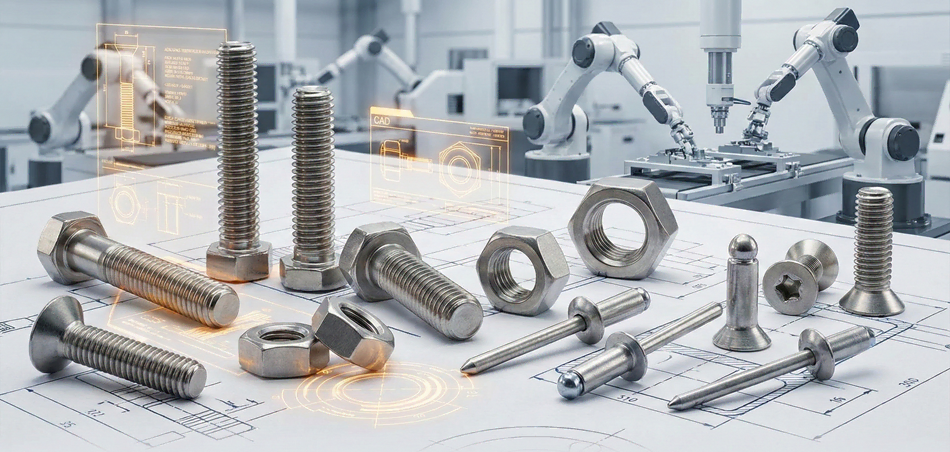
The global industrial fastener market represents a critical, high-precision infrastructure segment that provides the foundational stability for modern manufacturing, aerospace, automotive assembly, and civil engineering. Valued at approximately USD 91.04 billion in 2025, the sector is projected to undergo a sustained expansion, reaching USD 115.67 billion by 2032. This growth trajectory, characterized by a compound annual growth rate (CAGR) of 3.48%, is driven by an unprecedented convergence of technological advancement, geopolitical supply chain restructuring, and the aggressive electrification of global transport systems. The market is increasingly delineated by a shift from standardized commodity components to high-value, application-specific engineered fasteners that meet rigorous certifications like AS9100 for aerospace and API 20E for critical pressure-containment applications.
The Taxonomy of Fastener Trade: Understanding HTS Code 7318
To analyze the global trade flows accurately, one must look at the Harmonized System (HS) Code 7318, which classifies screws, bolts, nuts, coach screws, screw hooks, rivets, cotters, cotter-pins, washers, and similar articles of iron or steel. This classification system provides the granular data necessary to understand why certain nations dominate specific sub-segments. For instance, sub-HTS 7318.15 (other screws and bolts) remains the most traded category, accounting for roughly 45% of total fastener revenue globally.
The trade dynamics of HTS 7318 are influenced by raw material fluctuations in steel, aluminum, and titanium, as well as the increasing complexity of surface treatments such as zinc-nickel plating and high-performance ceramic coatings. In 2024, the world trade for these iron fasteners reached an estimated USD 48.7 billion, representing approximately 0.21% of total global trade volume. This seemingly small percentage belies the systemic importance of the product; as research indicates, fastener failures or supply chain delays in this segment can disrupt entire aerospace production lines or halt massive infrastructure projects.
Global Fastener Export Ecosystem: The Top 10 Exporting Nations
The export landscape is dominated by industrial powerhouses that have achieved high levels of vertical integration, from raw steel processing to precision machining and heat treatment. China remains the undisputed leader in volume and value, though its market share is increasingly contested by high-precision hubs like Germany and specialized centers like Taiwan.
Top 10 Fastener Exporting Countries (2024–2025 Data)
| Rank | Exporting Country | 2024/2025 Estimated Export Value (USD) | Primary Strategic Advantage |
| 1 | China | $10.1 Billion | Unmatched manufacturing scale and integrated supply chains |
| 2 | Germany | $7.05 Billion | High-end precision engineering for automotive and machinery sectors |
| 3 | United States | $5.61 Billion | Global leadership in aerospace-grade and specialty alloy fasteners |
| 4 | Taiwan | $4.83 Billion | High specialization in cold-forming and proprietary screw designs |
| 5 | Italy | $2.45 Billion | Sophisticated structural and architectural fastening solutions |
| 6 | Japan | $2.37 Billion | Precision micro-fasteners and high-quality material consistency |
| 7 | Vietnam | $1.80 Billion | Rapidly expanding hub for labor-intensive manufacturing and assembly |
| 8 | South Korea | $1.65 Billion | Strong integration with global automotive and shipbuilding OEMs |
| 9 | France | $1.15 Billion | Niche specialization in defense and luxury aerospace platforms |
| 10 | India | $1.05 Billion | Rising capacity in heavy construction and renewable energy projects |
Deep-Dive Analysis of Leading Exporters
The dominance of China in the export sector is a result of a massive manufacturing infrastructure that produced 3.056 million tons of fasteners in the first half of 2025 alone. While the export value for that period reached USD 5.92 billion (up 7.9% year-on-year), there has been a notable shift in pricing strategies. The average export price for Chinese fasteners dropped from USD 2,000 per ton in early 2024 to USD 1,900 per ton in 2025, suggesting that Chinese manufacturers are leveraging economies of scale to maintain competitiveness amid rising global trade barriers.
Germany’s second-place position reflects its role as the engineering heart of Europe. Unlike China’s volume-based approach, German exports are heavily weighted toward high-value-added components. In 2024, Germany achieved a trade surplus of USD 2.74 billion in fasteners, second only to China and Taiwan, highlighting its efficiency in producing components that command premium prices in the global market.
Taiwan holds a unique position as a specialized exporter. Despite its smaller geographic size, Taiwan’s fastener industry is highly integrated, covering everything from material supply to specialized finishing. Taiwan is the primary supplier of fasteners to the United States, providing 32.7% of total U.S. imports in 2024—a value nearly twice that of imports from China. This highlights Taiwan’s role as a trusted partner for Western manufacturers seeking stability and quality control outside of mainland China.
Global Fastener Import Ecosystem: The Top 10 Importing Nations
The import landscape is a reflection of global industrial demand, with major manufacturing and construction hubs requiring a steady influx of fasteners to fuel their assembly lines and infrastructure projects. The United States and Germany lead this category, acting as the world’s primary consumption sinks for these critical components.
Top 10 Fastener Importing Countries (2024–2025 Data)
| Rank | Importing Country | 2024/2025 Estimated Import Value (USD) | Primary Demand Driver |
| 1 | United States | $6.68 Billion | Vast aerospace, automotive, and MRO (Maintenance) requirements |
| 2 | Germany | $4.31 Billion | Integration of imported components into domestic automotive assembly |
| 3 | Mexico | $3.11 Billion | Explosive growth in “near-shored” automotive and aerospace manufacturing |
| 4 | China | $2.44 Billion | Demand for high-precision, high-quality fasteners from Japan and the West |
| 5 | Canada | $1.97 Billion | Heavy reliance on U.S. and Asian fasteners for automotive and resource sectors |
| 6 | France | $1.97 Billion | Significant demand from Airbus and Dassault aerospace clusters |
| 7 | India | $1.35 Billion | Massive urban housing initiatives and renewable energy infrastructure |
| 8 | United Kingdom | $1.15 Billion | Post-Brexit supply chain realignments in construction and aerospace |
| 9 | Brazil | $1.10 Billion | Growth in energy, oil and gas, and regional automotive assembly |
| 10 | Vietnam | $1.02 Billion | Growing need for high-quality fasteners to integrate into export-bound machinery |
Narrative of Import Demand and Trade Deficits
The United States maintains the world’s largest fastener trade deficit, importing roughly USD 1.07 billion more than it exports annually. This reliance is particularly heavy in the “other screws and bolts” category (7318.15), where the U.S. imported over USD 148 million from China and significant volumes from Taiwan in early 2025 alone. This import volume is a double-edged sword; while it supports low-cost domestic manufacturing, it has also prompted “reshoring” initiatives and infrastructure modernization programs to reduce dependency on volatile global supply chains.
Mexico represents the most dramatic growth story in the import sector. With a fastener trade deficit of USD 2.83 billion in 2024—the largest globally—Mexico has become the primary manufacturing floor for the North American market. Mexican imports are heavily skewed toward high-strength fasteners for the automotive and heavy equipment manufacturing sectors, primarily sourced from the U.S. and China.
China, despite being the world’s largest exporter, is also the fourth-largest importer. This paradox is explained by the technical requirements of high-end manufacturing. Chinese firms import “high quality, high precision, and technologically innovative” fasteners from Japan, Germany, and the United States for use in specialized sectors like semiconductor equipment and high-performance automotive engines. In H1 2025, Japan remained China’s top import source, providing USD 239 million worth of fasteners.
Corporate Leadership in Fastener Exports: The Top 10 Exporting Companies
In the fastener sector, these are primarily the high-capacity manufacturers and specialized international suppliers that dominate the HTS 7318 trade lanes. These companies are identified by their shipment volumes and presence in global trade databases.
Top 10 Fastener Exporting/Supplying Companies (2025)
| Rank | Company | Headquarters | Market Specialization |
| 1 | ITW (Illinois Tool Works) | USA | Highly diversified automotive and construction fasteners |
| 2 | Stanley Engineered Fastening | USA | Leader in high-tech aerospace and EV assembly systems |
| 3 | Würth Group | Germany | Global manufacturing and MRO supplier powerhouse |
| 4 | LISI Group | France | Aerospace and high-performance automotive alloys |
| 5 | KPF (Korea Parts & Fasteners) | South Korea | High-volume supplier for global construction and energy |
| 6 | Tong Hwei Enterprise | Taiwan | Major exporter of stainless steel screws and bolts |
| 7 | QST International Corp. | Taiwan | Leading supplier of specialized automotive fasteners |
| 8 | Sheh Fung Screws | Taiwan | High-volume exporter of structural and wood screws |
| 9 | Precision Castparts Corp. | USA | Advanced aerospace fasteners and superalloy components |
| 10 | Kamax Holding | Germany | Specialized in high-strength automotive bolts |
Strategic Analysis of Exporting Entities
The “Exporting Companies” in this sector often act as the primary nodes in a “Manufacturer + Supplier” approach. For instance, Stanley Engineered Fastening focuses on reducing “line-side touches” for airframers and automakers by offering bundled kitting and consignment inventory. This moves the company from being a simple exporter of parts to a provider of integrated logistics solutions.
Taiwanese exporters like Tong Hwei and Sheh Fung Screws are critical to the global supply chain, serving as the high-volume backbones for American and European distributors. These firms utilize advanced cold-forming technology to produce billions of units with minimal deviation, allowing them to dominate the HTS 7318.15 and 7318.14 categories in U.S. and European import records.
Meanwhile, KPF of South Korea has expanded its footprint by supplying large-scale infrastructure projects. Their shipments are frequently cited in global trade data as top suppliers to the U.S. market, reflecting South Korea’s robust steel industry and efficient export infrastructure.
Corporate Leadership in Fastener Imports: The Top 10 Importing Companies
The top importing companies are the major purchasers—either massive industrial distributors that bring in volume to sell to the MRO market, or global OEMs (Original Equipment Manufacturers) that import specialized components for their assembly lines.
Top 10 Fastener Importing/Buying Companies (2025)
| Rank | Importing Company | Primary Role | Key Import Origin |
| 1 | Fastenal Company | Industrial Distributor | Taiwan, China, India |
| 2 | W.W. Grainger | MRO Distributor | Global (Strong China/Taiwan presence) |
| 3 | Robert Bosch Automotive | Tier-1 OEM | Germany, Japan, USA |
| 4 | ZF Commercial Suspension | Tier-1 OEM | China, Germany, Mexico |
| 5 | Berrang Inc. | Specialized Importer | Germany, Italy, Japan |
| 6 | American Bolt & Screw | National Importer | Taiwan, China |
| 7 | Boeing Distribution | Aerospace OEM/Distributor | France, UK, Canada |
| 8 | MSC Industrial Supply | MRO Distributor | Global |
| 9 | Optimas Solutions | Global Supply Chain OEM | USA, Germany, China |
| 10 | McMaster-Carr | Catalog Distributor | Global (Specialized/Niche) |
Analysis of Importer Operations and Strategy
Major importers like Fastenal have transformed the fastener trade through technology. Fastenal’s “Onsite” programs manage customer inventory directly at the assembly line, utilizing FASTBin and FASTVend technology to track usage and trigger automatic import orders. This creates a highly efficient, data-driven import cycle that minimizes the “bullwhip effect” in the supply chain.
Tier-1 automotive suppliers like ZF Commercial Suspension and Robert Bosch represent the OEM side of the import market. These companies import highly specific “externally threaded products” (which comprised 47.34% of the market in 2025) to satisfy their global assembly standards. For these importers, quality and traceability are more important than price; they frequently source from AS9100-certified plants or high-end German and Japanese suppliers to ensure safety in critical suspension and steering systems.
Berrang Inc. and American Bolt & Screw serve as specialized mid-stream importers. Berrang, for example, is a critical bridge for European high-precision fasteners entering the North American market, ensuring that German-engineered machines in the U.S. have access to original-specification fasteners.
Sectoral Drivers: Automotive, Aerospace, and Renewable Energy
The fastener industry is intrinsically tied to the fortunes of its primary end-use sectors. As of 2025, the automotive segment dominates with a 30% market share, while the aerospace and energy sectors represent the highest growth potential.
Automotive Electrification and Lightweighting
The transition to electric vehicles (EVs) has fundamentally altered fastener design. Traditional internal combustion engines (ICE) require fasteners capable of withstanding high thermal stress, whereas EVs prioritize lightweighting and electrical insulation.
- Lightweighting: EV manufacturers are increasingly substituting traditional steel fasteners with aluminum and carbon fiber composites to improve battery range and efficiency.
- Vibration Resistance: Fasteners in battery assemblies must be extremely resistant to vibration to maintain electrical contact and prevent thermal runaway.
- Growth: Lightweight fasteners for EVs are projected to grow by 40% by 2030, creating a significant new market for specialized producers like Nifco Inc. and Stanley Engineered Fastening.
Aerospace Challenges and Material Evolution
The aerospace fasteners market is currently navigating a period of supply chain stress. Boeing’s August 2025 titanium billet pact with ATI was a direct response to an 84% price surge for aerospace hardware since 2019.
- Lead Times: Lead times for aerospace fasteners stretched to 52 weeks in 2025, forcing airframers to move toward regionalized supply chains and long-term commodity hedging.
- Smart Fasteners: The industry is testing “Smart Fasteners” with embedded sensors to monitor the health of aircraft structures in real-time, reducing the need for costly manual inspections.
Renewable Energy and Infrastructure
The shift toward offshore wind energy has created a demand for large-diameter, high-strength structural bolts capable of withstanding the corrosive saline environments of the North Sea and the South China Sea.
- Seismic Resilience: In regions like Japan, North America, and Turkey, stricter building codes are driving demand for high-strength structural bolts that can resist seismic forces.
- Infrastructure Stimulus: India and the Middle East (specifically Saudi Arabia and the UAE) are leading the world in infrastructure spending, creating a massive short-term demand for construction-grade fasteners.
Technological Innovations: Industry 4.0 and Smart Manufacturing
The fastener is no longer a “dumb” component. In the Industry 4.0 era, fasteners are being integrated into the digital twin of the assembly process.
3D Printing and Additive Manufacturing
Additive manufacturing is emerging as a disruptive force, particularly for rapid prototyping and low-volume, high-complexity fastener designs. This technology allows companies to bypass the long lead times of traditional forging and stamping for specialized aerospace components or medical implants.
Digital Traceability and Blockchain
With counterfeit fasteners accounting for 8% of global trade, digital traceability has become a regulatory imperative. Advanced manufacturers now use unique digital IDs for every batch of fasteners, allowing buyers to verify material certifications and heat treatment records via secure databases. This is critical for “safety-related applications” where a single faulty bolt can lead to catastrophic infrastructure failure.
Geopolitical Shifts and the Future of Fastener Supply Chains
As companies look toward 2026, the global fastener supply chain is being redefined by two competing forces: the pursuit of cost-efficiency and the need for geopolitical resilience.
Shifting Trade Blocs and Localization
Geopolitical uncertainty—including conflicts in the Middle East and ongoing trade wars—has forced a move toward “localization”.
- Reshoring: The U.S. and Europe are investing in domestic production capabilities to reduce dependency on Asian supply chains.
- India’s Rise: India is positioning itself as the primary alternative to China. Policy initiatives like capital subsidies for AS9100-certified plants aim to capture the aerospace fastener segment that is currently dominated by Western firms.
Sustainability and the Circular Economy
Sustainability is no longer a corporate buzzword but a market differentiator. In 2025, leading players like Bulten AB and Stanley Black & Decker are actively pursuing sourcing diversification and “green” fastener solutions.
- Recyclability: Fasteners are being designed for easier disassembly to align with circular economy principles.
- Eco-friendly Coatings: The industry is moving away from hazardous substances like hexavalent chromium in favor of more sustainable, high-performance coatings.
Economic Modeling of the Fastener Trade
The market dynamics can be analyzed through the lens of trade intensity and growth potential. If we assume the industrial fasteners market size is billion in 2025 and grows to billion by 2032 , the annual value change can be mapped as:
Where is the CAGR. For this period, . This growth rate is supported by the 4.69% CAGR expected in the aftermarket and MRO sectors through 2031, which provides a stabilizing revenue stream even when new-vehicle production fluctuates.
Furthermore, the price elasticity of fasteners remains low in critical industries like aerospace and medical devices, where the “cost of failure” far outweighs the component price. This allows high-end manufacturers like LISI and Precision Castparts to maintain robust margins despite rising raw material costs.
Conclusion: The Resilient Future of Fastening
The industrial fastener market is entering a phase of sustained, technology-led growth. While China remains the core manufacturing engine, the shift toward high-precision, specialized, and sustainable fasteners is creating new opportunities for hubs in Taiwan, India, and North America. For global participants, the key to success in the 2026–2032 window will be the ability to balance cost-effective production with the rigid certification requirements of the EV and aerospace sectors. As fasteners become “smarter” and more integrated into the digital supply chain, they will continue to serve as the literal and figurative bolts holding the modern industrial world together.
Share This Story, Choose Your Platform!